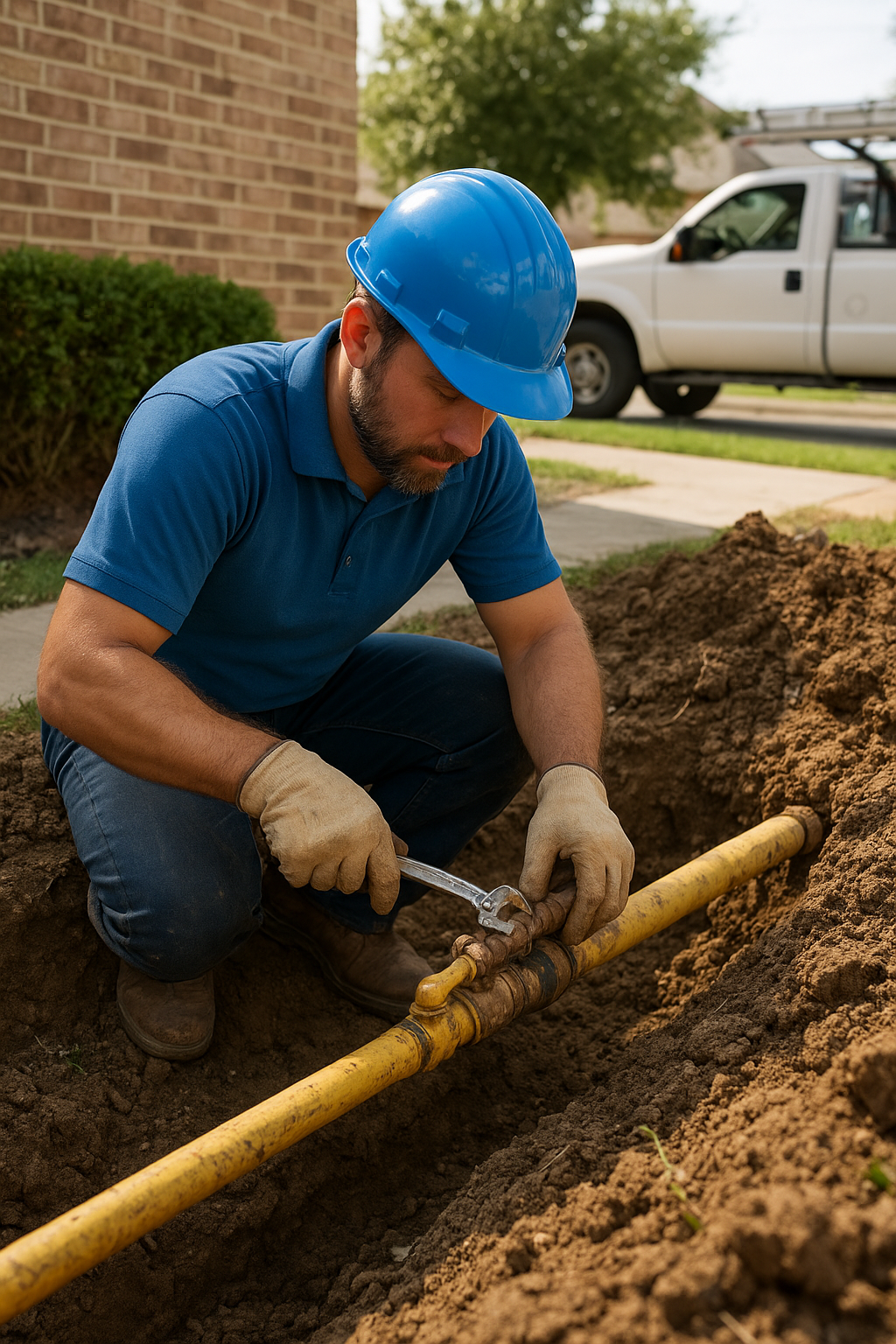
Plano homes built before the mid-1990s in Downtown Plano and East Plano often still carry original black-iron lines that corrode at joints after decades of soil movement. Hot summers dry the clay-heavy Collin County soil, then occasional severe storms bring rapid moisture changes that shift foundations and stress rigid pipe runs. Technicians working these neighborhoods routinely check accessible sections at the meter and under slabs before any excavation begins.
A gas leak is an emergency, and if you smell gas the first priority is safety, not diagnosis: get everyone out, avoid any flame, switch, or spark, and call 911 and your utility from outside. Once the property is safe, gas line repair locates the leak and fixes it. Because these calls can't wait, we offer emergency and same-day gas line repair to homeowners across Plano — whether you searched 'gas line repair near me' at 2am or noticed a faint odor near the patio after a storm.
West Plano and Willow Bend properties near Legacy Town Center frequently have CSST lines routed through attics where temperature swings and poor support create micro-fractures. When a leak is suspected, crews isolate the section, perform a standing pressure test, and replace only the damaged segment rather than the entire run. This targeted approach limits drywall cuts in finished spaces while meeting current venting and support requirements.
Gas lines serving outdoor kitchens or pool heaters at Legacy West addresses face extra exposure from summer heat and occasional high winds. Technicians pressure-test the entire system after any storm event because wind-driven debris can damage exposed regulators. Repairs here focus on accessible above-ground fittings first, then move to trenching only when underground sections show measurable drop during testing.
Technician insight
In Plano the thing that catches most people out with gas line repair is the clay soil in Collin County that expands after heavy rains then shrinks in summer heat, pulling on rigid lines especially in East Plano and Willow Bend homes built on older foundations. Homeowners often smell gas only after a storm because the movement opens a small crack that was stable for years.
Settling Line After Spring Storms
A Willow Bend homeowner noticed a faint odor near the patio after two severe storms. Pressure testing showed a slow drop on the underground run serving the outdoor kitchen. Crew isolated the section, replaced eight feet of line where soil had shifted, and confirmed zero drop on retest.
Gas Line Repair Services We Offer
✓Emergency Gas Leak Repair
Priority same-day response when you smell gas or suspect a leak — the urgent 'gas line repair near me' call for homes across Plano.
✓Gas Leak Detection
Electronic and soap testing to locate leaks at meters, joints and underground runs in Legacy West and Willow Bend homes.
✓Underground Gas Line Repair
Trenching and replacement of corroded or damaged lines under slabs and yards common in older East Plano properties.
✓Residential Gas Line Replacement
Full or partial replacement of aging black-iron or CSST lines in West Plano homes built before 1995.
✓Appliance Gas Line Connection
Proper sizing and installation of new connections for ranges, dryers and water heaters in Downtown Plano residences.
✓Gas Line Pressure Testing
System-wide pressure checks after storms or before closing on homes near Oak Point Park and the Plano Convention Center.
Gas Line Repair Cost in Plano, TX
| Service | Typical Range | What Affects It |
|---|---|---|
| Gas Leak Detection | $125–$350 | Varies with number of test points and whether attic or yard access is needed. |
| Underground Gas Line Repair | $650–$1,800 | Driven by depth, soil conditions, and distance from meter to structure. |
| Appliance Connection Repair | $175–$450 | Lower when the issue is at an accessible shutoff valve. |
| Full Residential Line Replacement | $1,400–$3,200 | Higher in older Downtown Plano homes with long runs under finished floors. |
Ranges are typical for Plano, TX and confirmed with an exact written quote before any work starts.
How it works
- 1
Initial Assessment
Technician arrives, reviews meter location and accessible piping, then asks about recent storm activity or smell reports.
- 2
Leak Isolation
Pressure test performed on sections to pinpoint whether the issue is at the meter, underground, or at an appliance connection.
- 3
Targeted Repair
Damaged segment replaced using matching materials and proper support; no full-system replacement unless corrosion is widespread.
- 4
Final Verification
System re-pressurized, all joints checked, and homeowner shown the repaired area before equipment is restored to service.
Pricing
Upfront quote given after on-site inspection; cost depends on access and length of line involved.